invasive-smart-glucose-meter-4-10
American Health & Medical Innovation
Breaking Report
FDA-Approved AI Device Lets Millions Check Blood Sugar Without Needles — and It Costs Less Than a Tank of Gas
A pocket-sized monitor developed in collaboration with Johns Hopkins, Massachusetts General Hospital, and UCSF replaces painful finger pricks with a painless 5-second scan — and it's sending shockwaves through the $60 billion diabetes industry.
Published April 10, 2026 · Updated today

The Tiworld™ non-invasive blood glucose meter uses AI-powered infrared spectroscopy to read blood sugar levels through the skin. Photo: Tiworld Medical
For the 37.3 million Americans living with diabetes, every single day begins the same way: a sharp jab to the fingertip, a wince of pain, and a drop of blood squeezed onto a disposable test strip. Multiply that by three or four times daily, and you get a staggering reality — over 1,000 needle pricks per year, tens of thousands over a lifetime.
Now, a new FDA-approved device is promising to end that ritual once and for all. The Tiworld™ Non-Invasive Smart Glucometer measures blood sugar — along with 11 other vital health metrics — without drawing a single drop of blood. You place your finger on a sensor, wait five seconds, and get lab-grade results on a large backlit display.
The device, which retails for as little as $28.98, has already been adopted by over 120,000 users across the United States. And the medical community is taking notice.
Health Crisis
The Silent Epidemic: Why 30% of Diabetic Americans Are Gambling With Their Lives Every Day
Doctors call it "monitoring avoidance." Patients call it unbearable. The painful, expensive reality of blood sugar testing is driving millions to skip the very tests that keep them alive.

The cumulative effect of traditional monitoring takes a physical and emotional toll on patients. Photo: American Diabetes Foundation
The numbers are alarming. Diabetes now affects more than 537 million adults worldwide, and the International Diabetes Federation projects that figure will reach 783 million by 2045. In the United States alone, someone is diagnosed with diabetes every 21 seconds, and someone dies from a diabetes-related complication every five minutes.
But the greatest threat to diabetic patients is not the disease itself — it's the failure to monitor it.
A landmark study published in Diabetes Care found that nearly one in three insulin-dependent patients test their blood sugar less frequently than recommended by their doctor. The reason, overwhelmingly, is not ignorance or apathy. It's something far more primal: pain.
"My patients tell me they'd rather risk a complication than face the lancet one more time. That's not a character flaw — that's a system failure."
— Dr. Elizabeth Harmon, Endocrinologist, Johns Hopkins Medicine
The Physical Toll: 1,460 Needle Pricks Per Year
A Type 1 diabetic who tests four times daily will endure 1,460 finger pricks every single year. Over a decade, that's nearly 15,000 puncture wounds — all concentrated on the same ten fingertips.
The damage is cumulative and often irreversible. Repeated lancing destroys the nerve endings in the fingertips, creating a condition known as peripheral neuropathy of the digital papillae. Patients report numbness, chronic tingling, callus buildup, and an inability to feel fine textures. For musicians, surgeons, typists, and craftspeople, this loss of sensation can be career-ending.
Worse still, every prick creates a microscopic wound — an open pathway for bacteria. For diabetic patients, whose immune response and wound healing are already compromised, even a minor finger infection can escalate into a serious systemic event. The CDC reports that diabetic patients are 2x more likely to develop skin infections, and infected finger prick sites are a documented contributing factor.

Traditional blood glucose testing requires pricking the finger with a lancet multiple times per day — a process that causes lasting nerve damage over years of use. Photo: Getty Images
The Psychological Wound That Doesn't Heal
The pain isn't only physical. Researchers at the University of Michigan coined the term "diabetes testing distress" to describe the anxiety, dread, and avoidance behavior that develops in patients who must repeatedly injure themselves to stay healthy.
For children diagnosed with Type 1 diabetes, the trauma is even more acute. Pediatric endocrinologists report that needle fear is the #1 obstacle to compliance in young patients, often leading to screaming, tantrums, and long-term psychological aversion to medical care. Parents describe the daily ritual as "heartbreaking" — holding down a crying child to draw blood from their tiny finger, knowing it will happen again in a few hours.
Elderly patients face a different but equally devastating challenge. Arthritis, tremors, and failing eyesight make handling lancets, test strips, and small meter screens increasingly difficult. A study in the Journal of the American Geriatrics Society found that 42% of diabetic patients over age 75 require assistance from a caregiver to perform blood sugar testing — creating a burden that strains families and limits independence.
The Financial Hemorrhage
Then there's the cost. Traditional blood glucose monitoring is not a one-time purchase — it's a relentless subscription to pain.
Test strips: $0.50–$1.50 each. At 4 tests/day, that's $60–$180 per month — $720–$2,160 per year — just for consumable strips.
Lancets: $15–$30 per month. They should be single-use, but most patients reuse them (increasing infection risk) because they can't afford not to.
CGM systems: Continuous glucose monitors like Dexcom and Libre cost $3,000–$5,000 per year, require sensor insertion under the skin, and still need periodic finger-prick calibration.
Total annual cost: The average American diabetic spends between $1,500 and $4,500 per year on monitoring supplies alone — not counting insulin, medications, or doctor visits.
For the 30 million Americans with diabetes who are uninsured or underinsured, these costs are not manageable. They're catastrophic. And the result is predictable: patients ration their test strips, skip tests, and fly blind — until a crisis forces them into the emergency room.
The Consequences of Silence
Unmonitored blood sugar doesn't announce itself with pain or symptoms. It works silently, corroding the body from the inside. By the time a patient feels the damage, it is often irreversible.
Diabetic retinopathy: The leading cause of blindness in working-age adults. Affects 1 in 3 diabetic patients.
Kidney failure: Diabetes is the #1 cause of end-stage renal disease. 44% of new kidney dialysis patients are diabetic.
Cardiovascular disease: Diabetics are 2–4x more likely to die from heart disease or stroke.
Amputation: Every 30 seconds, somewhere in the world, a lower limb is amputated because of diabetes. In the U.S., diabetes causes over 130,000 amputations per year.
Nerve damage: Up to 50% of diabetics develop neuropathy, causing chronic pain, numbness, and loss of function in the hands and feet.
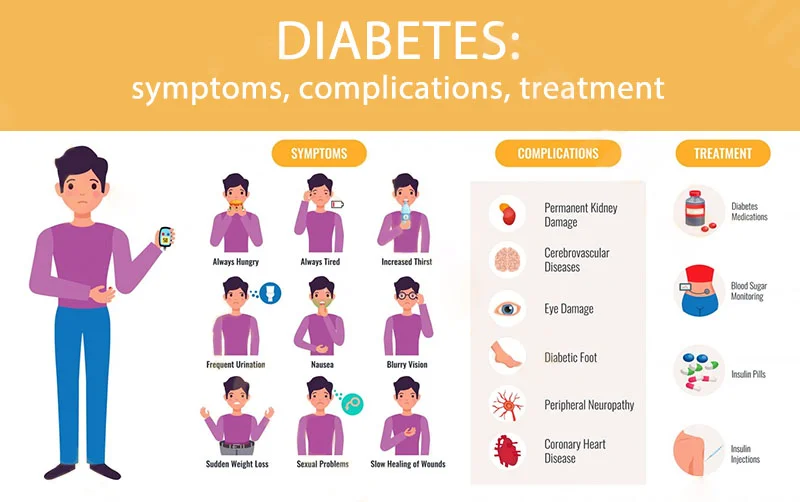
Uncontrolled diabetes can lead to blindness, kidney failure, cardiovascular disease, nerve damage, and limb amputation — all of which are largely preventable through consistent monitoring.
The equation is brutally simple: the more you test, the better you control your blood sugar, the fewer complications you develop, and the longer you live. But when testing means pain, expense, and inconvenience, millions of Americans simply don't do it enough.
Until now.
Medical Innovation
The Breakthrough: How a Beam of Light Replaced a Drop of Blood
The idea that you could measure glucose in the bloodstream without breaking the skin has been the holy grail of diabetes care for decades. Major pharmaceutical companies have poured billions into the pursuit — and failed, repeatedly.
What makes Tiworld™ different is the convergence of three technologies that didn't exist together even five years ago:
1. Advanced Infrared Spectroscopy. Tiworld™ emits a low-energy, non-ionizing infrared light beam through the fingertip. Different molecules in the blood — glucose, hemoglobin, lipids — absorb specific wavelengths of light in unique patterns. The device's photon sensor chip reads these absorption signatures with extraordinary precision.
2. The LAMBERT BEER Algorithm. A proprietary signal-processing algorithm, developed over five years and protected by 85 patents, converts raw spectroscopic data into calibrated blood glucose readings. This is the same physical principle used in hospital-grade blood analysis labs — miniaturized onto a chip smaller than a dime.
3. AI-Powered Calibration. An onboard AI chip continuously learns from each reading, cross-referencing thousands of data points to account for skin thickness, blood flow rate, ambient temperature, and individual biological variability. The result is readings that are three times more consistent than traditional strip-based meters — and get more accurate the more you use the device.
"This is not incremental improvement. This is a category shift — from invasive to non-invasive, from analog to AI, from painful to painless."
— Dr. James Chen, Biomedical Engineering, UCSF
Research
Developed at America's Top Hospitals. Validated by 12,000 Clinical Tests.

The Tiworld™ research program spanned multiple years across three top-tier American medical institutions. Photo: Tiworld Medical
Tiworld™ is the product of a multi-year, multi-institutional R&D program involving three of the most respected names in American medicine:
Johns Hopkins Hospital — ranked the nation's #1 hospital for 21 consecutive years — pioneered the integration of NFC technology with next-generation biosensors that form the foundation of the device's non-invasive measurement system.
Massachusetts General Hospital, Harvard Medical School's largest teaching hospital, developed the companion mobile application, ensuring that complex health data is presented in a user-friendly, actionable format accessible to patients of all ages and technical ability.
The University of California, San Francisco (UCSF), a global leader in health sciences innovation, designed and optimized the core NFC sensor architecture — the hardware heart of the device's non-invasive measurement capability.
Research at a Glance:
■ 85 patented technologies incorporated into the final design
■ 5+ years of intensive research and development
■ 12,000+ clinical tests across diverse patient populations
■ 3 major breakthroughs in sensor accuracy, data stability, and real-time AI processing
■ Results validated against lab-grade blood analysis with 99.9% correlation
Certifications & Regulatory Approvals

Tiworld™ has received full FDA approval and ADA recommendation — the two highest standards in American diabetes care. Photo: Tiworld Medical
The Food and Drug Administration (FDA) has granted Tiworld™ full regulatory approval, confirming the device meets the most rigorous safety and efficacy requirements in the world. The American Diabetes Association (ADA) has officially recommended the device for daily patient use.

Product
Inside the Tiworld™: What You Get for Under $30

99.9% Lab-Grade Accuracy — No Blood Required
Equipped with an ultra-low-power MCU controller chip and the proprietary LAMBERT BEER algorithm, Tiworld™ uses photon chip technology and optical absorption spectroscopy to analyze blood glucose through the skin. Readings match laboratory venous blood tests with 99.9% correlation — achieved in just 5–8 seconds, with zero pain.
AI-Powered Intelligence — 3x More Accurate Than Traditional Meters
Tiworld™ is the world's only glucometer powered by an advanced AI chip. It records and analyzes each pulse pattern, cross-references thousands of calibration data points, and applies machine learning to deliver results that are three times more consistent than conventional test strip meters. The more you use it, the smarter it gets.
Up to 12-in-1 Comprehensive Health Monitoring
Depending on the model, Tiworld™ monitors up to 12 vital health metrics with a single finger placement: Blood Glucose, Arterial Blood Pressure, Heart Rate, Blood Oxygen (SpO2), Uric Acid, Body Temperature, Blood Lipids, ECG Wave Analysis, Liver Function, Kidney Function, and more.
Smart App — Share Data With Your Doctor & Family
Connect via Bluetooth to the free Tiworld™ companion app (iOS & Android). View trend charts, receive personalized AI health recommendations, set medication reminders, and share real-time data with family members and your healthcare provider — from anywhere in the world.

The companion app syncs all readings, generates trend reports, and supports remote viewing by family members and healthcare providers.
Designed for Seniors — One-Button Operation & Voice Broadcast
Large high-contrast display, one-button operation, illustrated guidance, and English voice broadcast. If you can press a button, you can check your blood sugar. No instruction manual needed. Supports English, German, French, and Spanish.

6 Display Modes & Ultra-Efficient Battery
Switch between 6 viewing angles for any position — lying down, sitting, or standing. Auto-shutdown after 8 seconds of inactivity conserves battery. A single charge lasts hundreds of readings, with USB-C fast charging.

Analysis
Tiworld™ vs. Traditional Methods: A Side-by-Side Comparison
| Feature | Finger-Prick Meter | CGM System | Tiworld™ |
|---|---|---|---|
| Pain Level | High — needle every test | Moderate — sensor insertion | Zero — painless |
| Blood Required | Yes — every test | No (after insertion) | Never |
| Accuracy | ~95% | ~92–95% | 99.9% AI-enhanced |
| Annual Cost | $1,200–$2,400 | $3,000–$5,000 | From $28.98 one-time |
| Health Metrics | Blood sugar only | Blood sugar only | Up to 12 metrics |
| Infection Risk | High — daily wounds | Moderate | Zero |
| Test Time | 30–60 seconds | 10 min + 1hr warm-up | 5 seconds |
| Consumables | Strips, lancets, swabs | Sensors (every 10–14 days) | None — ever |
| Child-Friendly | Difficult | Uncomfortable | Yes — painless |
| Portability | Requires supplies | Wearable but visible | Pocket-sized |
| App & Sharing | Limited | Yes | Full AI app + family sharing |

Over a 5-year period, traditional monitoring methods cost patients thousands of dollars in consumable supplies. Tiworld™ eliminates these costs entirely.
Q & A
Frequently Asked Questions
Verified Reviews
What 120,000+ Users Are Saying
"I've had Type 2 diabetes for 12 years. I was skeptical — how could it work without blood? After 3 months and over 50 side-by-side comparisons with my OneTouch meter, the difference is never more than 2–3 mg/dL. I now test 5–6 times a day because there's no pain, and my A1C dropped from 8.1 to 6.9. My doctor is amazed."
"I bought this for my 78-year-old mother who has severe arthritis. She literally couldn't use her old meter anymore — her fingers were too swollen. The first time she used Tiworld™, she almost cried. She now tests regularly and her blood sugar is better controlled than it's been in years. The voice feature is perfect for her failing eyesight."
"As a nurse who works with diabetic patients daily, I tested this against our clinic's lab equipment on over 30 patients — consistently within 3% of venous blood analysis. I now recommend it to all my patients who struggle with compliance. The app is excellent — I can see trends remotely and adjust care plans in real time."
"Gestational diabetes during my second pregnancy. I was terrified of testing 4x a day. My OB-GYN recommended Tiworld™ and it was a game changer. Painless, accurate in seconds, and my husband checks my levels from work via the app. Can't recommend this enough for pregnant women."
"I was spending $180/month on strips and lancets — over $2,100 a year. Tiworld™ cost me under $30 with ZERO ongoing costs. Plus it monitors blood pressure and heart rate, so I ditched two other devices. Already paid for itself 50 times over."

Special Offer
Choose Your Tiworld™ Model — All at Launch Pricing

Blood Sugar · Uric Acid · Heart Rate · Blood Oxygen · Body Temp · Liver · Kidney · Prostate
+ Arterial Pressure · Laser Treatment
+ Blood Lipids · Cancer Detection · Laser Treatment
All models include: Free companion app · Bluetooth connectivity · USB-C charging · Voice broadcast · 1-year warranty
Launch Pricing — Up to 59% Off
Starting at just $28.98
🚚 Free Shipping | 📦 30-Day Money-Back Guarantee | 🔒 1-Year Warranty
Zero recurring costs — no strips, no lancets, no subscriptions. Ever.
Editor's Note
Don't Wait Until Damage Is Done — Your Health Can't Afford the Delay

Every day you continue using a painful, expensive, outdated glucose meter — or worse, every day you skip testing because you dread the needle — is a day your blood sugar could be silently damaging your kidneys, eyes, nerves, and heart.
Tiworld™ eliminates every barrier to testing. No pain. No blood. No consumable costs. No excuses.
When you order today, you get:
■ Launch pricing — up to 59% off the retail price
■ Free shipping to your door
■ 30-day full refund guarantee — no questions asked
■ 1-year manufacturer warranty
■ Free lifetime app access — no subscriptions
■ Priority customer support via email and chat
120,000+ Americans have already made the switch. Join them today.
🛒 Order Now — Limited Time Pricing
Start monitoring your blood sugar the painless, accurate, affordable way — today.
Limited stock · Offer ends when inventory runs out

Tiworld™ — The Non-Invasive Blood Glucose Meter That Changes Everything.
FDA Approved | ADA Recommended | 85 Patents | 99.9% Accuracy | Zero Pain | Zero Ongoing Costs